Need storm & hail damage roof repair in Arlington Heights?
Questions about an aging or storm-hit roof? Reach out through the request form or email contact@congratulationsdialogue.living, and we will point you to a local provider.
No obligation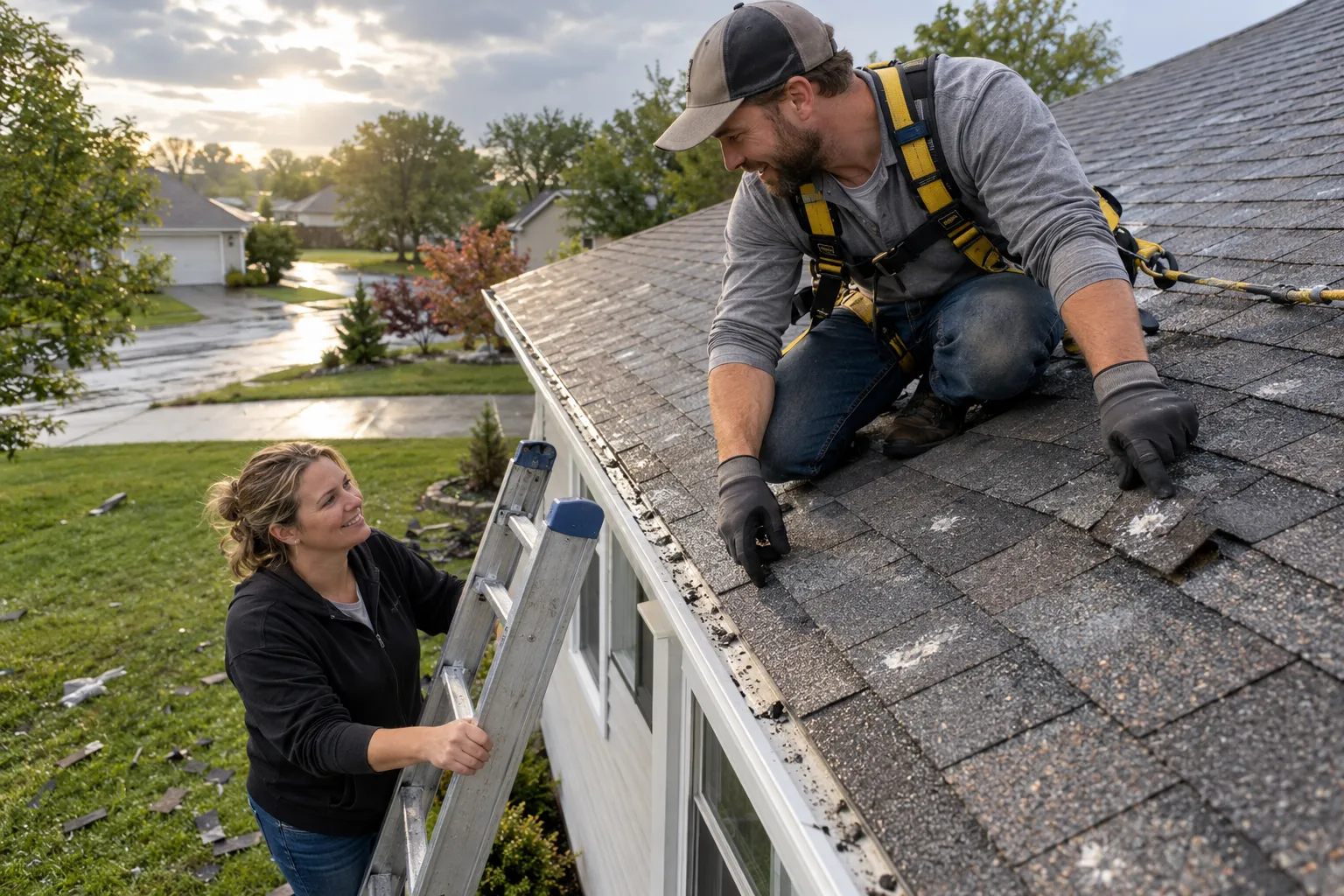
Many homeowners think a roof is fine if the ceiling is dry. Myth, then truth: hail can bruise shingles and loosen the grit that protects them, and wind can lift edges without tearing anything off. The leaks often show up months later.
Congratulationsdialogue Roofing is a referral service. We do not do the roof work. We connect you with independent local providers in our network who inspect storm damage, explain what they find, and quote the job in writing. Some jobs need a small fix. Others call for a full replacement. Either way, the goal is to protect the house, and its value, before the next round of weather rolls through the Arlington Heights area.
A lot of people think the first move is to climb up and look. In practice, a wet, debris-covered roof is a bad place to stand.
Look from the yard instead. Walk around the house and check for shingles in the grass, dented gutters, and torn flashing. Take photos with your phone. If the ceiling sags or drips, keep clear of that room and stay away from any downed power lines.
If water is coming in, you may need emergency roof repair. That usually means a tarp or a patch to hold things until the weather clears. Request a callback to check provider availability, since many providers can respond quickly after a big storm.
Think of a tarp as a bandage. It keeps the rain out. It is not the final fix.
Here is the truth. Roofs hide storm damage well. Water can run along rafters and soak insulation long before a stain shows on the ceiling. In a house with a full basement and a sump pump, you may notice damp air or musty smells first, and blame the wrong thing.
A quick look after every hard storm is cheap protection. Waiting for a drip is the costly way to find out.
Different storms leave different marks. Here are the common ones:
A proper inspection goes beyond a walk around the yard. A provider should check the shingles, the flashing, the vents, and the gutters. They should also look at the decking and the attic when it makes sense.
Ask for photos of what they find. Good photos also help when you talk with your insurance company, since providers can often help document damage for a claim.
Myth: every hail storm means a new roof. Truth: it depends on how much of the roof is hurt, how old it is, and whether the damage is spread out or in one spot.
A few torn shingles on a young roof can often be fixed. Widespread bruising on an older roof is a different story. In that case, hail damage roof replacement may cost less over time than patching again and again. Cold winters with deep frost and hot, humid summers punish weak spots fast.
A lot of people think insurance simply pays for a storm-damaged roof. In practice, it depends on your policy. Some policies may cover sudden damage, but many have deductibles and limits, and some treat hail differently from other storms.
Check your policy and contact your insurer early. Keep your photos, your receipts, and any written quotes in one folder.
After a big storm, strangers may knock and say they spotted damage on your roof. Some are honest. Some are not.
Take your time. Never sign on the spot, never hand over a large payment up front, and be wary of anyone who offers to deal with your insurer for you in exchange for a signature. A good provider will still be around after you compare quotes.
Ask before signing. These questions tell you a lot:
A good answer is short, clear, and backed by paper. The provider explains the plan, shows the damage, and does not rush you.
Red flags are easy to spot. Watch for pressure to decide today, a price that is far below the others, no written quote, or a request for the full payment in advance. Local roofing contractors with a real address and real references are usually the safer pick.
A roof with hidden storm damage can bring trouble at resale. Buyers and inspectors look closely at roofs. Frame houses that are many decades old, bungalows, and ranch homes all depend on a sound roof to keep the walls and attic dry.
Spring flooding and heavy summer storms make that even more important. Getting storm damage repair done right now protects the house and makes a future sale smoother.
Request a callback to check provider availability, or use the request form and compare written quotes at your own pace.
A provider checks shingles, flashing, vents, and gutters, then shows you photos of what they find.
Providers look for bruising, grit loss, and dents that are hard to see from the ground.
Tarping or patching can keep rain out until the permanent work is ready.
Providers explain whether a smaller fix is enough or a new roof makes more sense.
Prices vary a lot by roof size, pitch, materials, and how much damage there is. These are typical U.S. ranges only. Always get a written quote from a provider before you agree to any work.
| Item | Typical range | Notes |
|---|---|---|
| Storm damage inspection | $150 – $500 | Some providers include it with a quote |
| Temporary tarp or patch | $300 – $1,000 | Holds until permanent work is done |
| Small storm repair | $400 – $2,500 | A few shingles or one flashing spot |
| Larger section repair | $1,500 – $6,000 | Depends on decking damage |
| Gutter and flashing replacement | $300 – $2,000 | Often damaged along with the roof |
| Full roof replacement after hail | $7,000 – $20,000 | Size, pitch, and materials change the price |
Look from the ground, snap pictures of anything unusual, and keep away from sagging ceilings or wires.
Request a callback or send the request form, and we connect you with a provider in our network.
The provider checks for hail and wind damage and explains what they find.
Review the scope, materials, and price on paper, ask your questions, and decide without pressure.
A loose shingle or bruised patch lets water in, and rain, frost, and thaw make it worse.
Water can soak insulation and wood for months before any stain shows on a ceiling.
Photos and written findings taken soon after a storm make talking with your insurer easier.
A sound, well-documented roof helps protect resale value and keeps buyers from worrying.
Questions about an aging or storm-hit roof? Reach out through the request form or email contact@congratulationsdialogue.living, and we will point you to a local provider.
No obligationLook for dented gutters, bare spots, or dark bruises on shingles. Many signs are hard to see from the ground, so a provider's inspection is the surest way to know.
It depends on how widespread the damage is and how old the roof is. Small, local damage can often be repaired. Widespread hail damage on an older roof may call for replacement.
Some policies may cover sudden storm damage, but coverage, deductibles, and limits differ. Check your policy, contact your insurer, and keep photos and written quotes handy.
Questions about an aging or storm-hit roof? Reach out through the request form or email contact@congratulationsdialogue.living, and we will point you to a local provider.
No obligation