Need roof repair in Arlington Heights?
Questions about an aging or storm-hit roof? Reach out through the request form or email contact@congratulationsdialogue.living, and we will point you to a local provider.
No obligation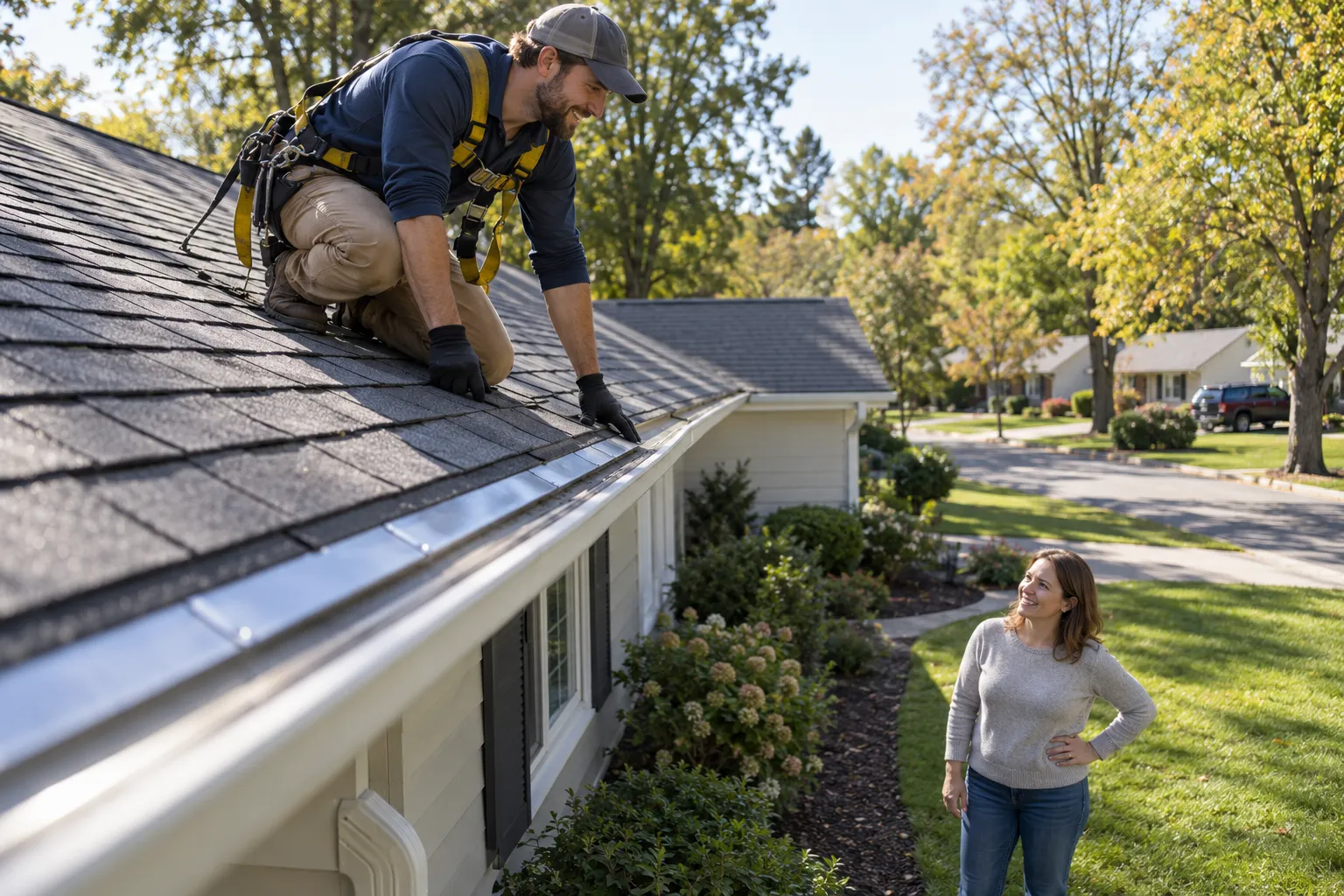
A lot of people think a roof repair is just a bit of sealant and a ladder. In practice, a good repair starts with finding where the water really gets in. That spot is often far from the stain on your ceiling.
Congratulationsdialogue Roofing is a referral service. We do not do the work. We connect you with independent local providers in our network who inspect the roof, fix the problem and give you a written quote. Use this page to learn what repairs involve, when a repair is enough, and which questions to ask before signing. Protecting the house now protects its value later.
A lot of people think a leak only counts once water drips onto the floor. In practice, the roof has often been letting water in for weeks. A stain, a damp attic or a drip all deserve quick attention.
Move rugs and furniture out of the way. Set a bucket under the drip. Take photos. Stay off the roof, because wet shingles are slick.
Request a callback to check provider availability for emergency roof repair in Arlington Heights. Many providers can respond quickly when water is coming in.
It seems harmless. A faint brown ring, maybe a musty smell. The truth is that water keeps working while you sleep. It soaks insulation, softens the wood under the shingles and feeds mold.
Cold winters bring deep frost. Water slips into a tiny gap, turns to ice and pushes the gap wider. Hot, humid summers then bake that same spot and wear down the sealant. Spring thaw and heavy rain test every weak seam.
Older frame houses, bungalows and ranch homes often have long, simple roof runs. One failed spot can wet a lot of ceiling.
Most repairs are smaller than people fear. A provider may:
The fix should match the cause. A smear of sealant over rotten wood is not a repair.
After a hard thunderstorm, a few lifted or missing shingles are common. Storm damage repair for limited harm like that can be simple. If hail bruised the whole roof, it is a different job, and hail damage roof replacement may make more sense. Ask the provider to show you which one you have.
Water travels. It can run down a rafter and drip far from where it came in. So the stain only tells you the area to start.
A careful provider checks the attic first. They look for dark wood, wet insulation and daylight where there should be none. Then they check the usual suspects outside: flashing, vent boots, valleys and popped nails. Some test one section at a time with a hose to confirm the source.
Myth: a roofer who mentions replacement is just upselling. Truth: sometimes the repair is the honest answer, and sometimes it is only a patch on a tired roof.
Repair often fits when the damage is in one spot and the rest of the roof is sound. Replacement may fit when you see widespread curling, bare patches, many leaks or a roof near the end of its typical life. Ask for both options in writing.
A tarp placed by a provider can hold things until a proper repair. A bucket and a few photos help too. Skip thick layers of roofing cement, and do not climb up in rain or ice.
Photos also help with paperwork. Some policies may cover sudden damage, so check your policy. Providers can often help document damage for a claim.
Asphalt shingles are the easiest to patch. Low-slope ranch and bungalow roofs hold water longer, so seams matter more. Metal roofs often leak at fasteners and seams. Flat sections need sealed edges and clear drains. Ask whether the provider handles your roof type often.
A buyer's inspector will spot a stained ceiling or a mismatched patch. A clean, documented repair tells a better story. Keep the quote, the photos and the final invoice in one folder.
Ask before signing. Good local roofing contractors answer plainly and put things in writing.
A good answer is specific and calm. It names the cause and the fix.
Be careful with big pressure to sign today, a cash-only demand, a vague quote, or a big deposit upfront. A provider who will not put the scope in writing is not ready for your roof.
A provider traces the water back to its real entry point, not just the stain below.
Cracked, curled or missing shingles are replaced to match the roof.
Sealing weak spots around chimneys, pipes and walls, where many leaks begin.
You get the scope, materials and price on paper, so you can compare options before you decide.
Repair prices vary a lot by roof type, pitch, materials and how much wood is damaged. These are typical U.S. ranges only. Always get a written quote that spells out the scope before work begins.
| Repair item | Typical range | Notes |
|---|---|---|
| Replace a few shingles | $150 – $500 | Small, one-spot fixes |
| Flashing repair | $200 – $800 | Chimneys, walls, valleys |
| Vent boot or pipe seal | $150 – $450 | Common leak spot |
| Leak inspection | $100 – $400 | Often applied to the repair |
| Decking section replaced | $300 – $1,000 | Depends on rot and size |
| Emergency tarping | $250 – $1,000 | Short-term cover only |
Share where you see the leak or damage, and what the weather has been like lately.
We connect you with an independent provider in our network who handles roof repair near you.
The provider checks the roof and attic, then gives you a written quote.
Pick the provider you trust and set a time for the work.
We explain roofing myths in simple words, so you know what is true before you talk to anyone.
Independent providers in our network work in your area and know local weather.
Get clear questions to ask and red flags to spot before you sign.
Compare a clear, written quote so you can decide with confidence.
Questions about an aging or storm-hit roof? Reach out through the request form or email contact@congratulationsdialogue.living, and we will point you to a local provider.
No obligationActive dripping, a sagging ceiling or water near light fixtures is urgent. Move belongings, set a bucket and take photos. Request a callback to check provider availability. Many providers can respond quickly to emergency roof repair needs.
Not really. Sealing a stain or patching drywall hides the sign, not the cause. The repair has to happen where water enters the roof. A provider can find that spot and fix it properly.
It depends on your policy and the cause. Some policies may cover sudden damage, such as storm harm, but not wear. Check your policy, and ask providers to help document the damage.
Questions about an aging or storm-hit roof? Reach out through the request form or email contact@congratulationsdialogue.living, and we will point you to a local provider.
No obligation